Psychology
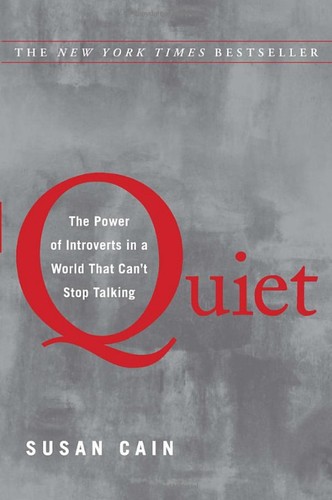
Quiet
by Susan Cain · 2012 · 333 pages
★4.07· 356K ratings
Quiet
Introversion is not a flaw to be fixed. In a culture that prizes extroversion, Quiet argues that roughly a third of all people have been misunderstood — and that the world needs what they have to offer.
Takeaway 1: We Live in an Extrovert Ideal — But It Wasn't Always This Way
Susan Cain traces a cultural shift in American life from the 19th to 20th century: from a "Culture of Character" (where inner virtue, depth, and seriousness were prized) to a "Culture of Personality" (where charisma, expressiveness, and social dominance became the ideals).
Dale Carnegie's rise, Hollywood, the open-plan office, the participatory classroom — these didn't happen randomly. They reflected a cultural preference for extroversion that became so pervasive it stopped being visible.
The consequence: roughly a third of the population — introverts — are routinely told, implicitly and explicitly, that the way they naturally are is wrong. They should speak up more, be more outgoing, show more enthusiasm. The message: be more like an extrovert.
Cain's argument: this is a massive waste. Introverts have genuine and irreplaceable strengths. Societies that optimize for extroversion lose access to those strengths.
Takeaway 2: Introverts Are Not Shy — They Are Differently Stimulated
Introversion and shyness are not the same thing. Shyness is fear of social judgment. Introversion is a preference for less stimulation.
Introverts process information more deeply and are more sensitive to external stimulation. They prefer environments with less noise, fewer people, and more time to reflect. After social interaction — even enjoyable interaction — they need alone time to recharge.
Extroverts gain energy from social interaction and are understimulated without it. Neither is better. They're different nervous system calibrations.
The practical implication: introversion and extroversion are not character flaws or strengths. They're different kinds of wiring that suit different tasks. Complex problem-solving, deep work, writing, and careful analysis tend to favor introverts. Rapid social connection, teamwork, sales, and leadership in dynamic environments often favor extroverts.
Takeaway 3: How Introverts Can Thrive in an Extrovert World
Cain does not suggest introverts should retreat from the world. She describes a "rubber band theory": we all have a natural range, and we can stretch beyond it when necessary — for work we care about, for people we love. But we can't stretch indefinitely without snapping back.
The practical moves for introverts:
- Identify what you're willing to act extroverted for — and be deliberate about it
- Build restoration time into your schedule after depleting social interaction
- Choose environments that match your wiring when you have the choice
- Stop apologizing for needing to think before speaking
And for extroverts living and working with introverts: give them quiet, give them time, and don't mistake their silence for having nothing to say.
Analysis
Quiet became a cultural phenomenon when it was published in 2012. It gave millions of self-identified introverts language for experiences they'd had for decades but couldn't name.
The book is more cultural history and science journalism than strict psychological research, but Cain synthesizes a wide range of findings accurately and contextualizes them beautifully. Its impact in organizational settings — where open-plan offices and constant meetings had become gospel — has been substantial.
About the Author
Susan Cain is the author of Quiet and co-founder of Quiet Revolution, a company focused on unlocking the power of introverts in education and business. Her TED Talk on introversion is one of the most watched in history, with over 40 million views.
You Might Also Like
See all →
Man's Search for Meaning
Viktor Frankl

Maybe You Should Talk to Someone
Lori Gottlieb

Never Split the Difference
Chris Voss

The Body Keeps the Score
Bessel van der Kolk

Nonviolent Communication
Marshall Rosenberg

Atomic Habits
James Clear

The 5 Love Languages
Gary Chapman

The Psychology of Money
Morgan Housel

The Seven Principles for Making Marriage Work
John Gottman
The Gifts of Imperfection
Brené Brown

How to Win Friends and Influence People
Dale Carnegie
Influence
Robert Cialdini