
Psychology
Man's Search for Meaning
by Viktor Frankl · 1946 · 148 pages
★4.37· 593K ratings
Man's Search for Meaning
Frankl survived the Holocaust and emerged with a radical insight: even in the worst suffering imaginable, humans can choose their response. And that choice is everything.
Takeaway 1: Meaning Can Be Found in Any Circumstances
Viktor Frankl was a psychiatrist in Vienna when he was transported to Auschwitz in 1942. He survived four concentration camps. Most of his family did not.
What he observed in the camps — and what he would spend the rest of his life describing — was a consistent pattern: prisoners who held onto a sense of meaning survived longer and suffered less psychologically than those who lost it. This wasn't magical thinking. It was observable. Prisoners who believed they had something left to live for — a person waiting for them, a work left unfinished, a faith not yet extinguished — maintained a will that others lost.
Frankl's insight: suffering in itself is meaningless. It is the relationship we have with our suffering that determines whether it breaks or transforms us.
Takeaway 2: Freedom Cannot Be Taken — Only Surrendered
The most famous passage in the book:
"Everything can be taken from a man but one thing: the last of the human freedoms — to choose one's attitude in any given set of circumstances, to choose one's own way."
This is not a platitude. Frankl wrote it having lived in conditions designed to strip every human freedom. His claim is that even in the worst circumstances imaginable, some prisoners maintained an inner life — humor, beauty, love — that the external world could not reach.
He is not saying suffering is good or that positive thinking overcomes circumstances. He is saying that between stimulus and response, there is a space. And in that space lies our last freedom.
Takeaway 3: Logotherapy — Meaning as the Core Human Drive
Frankl developed logotherapy (from logos, meaning "meaning") — a school of psychotherapy that holds meaning-seeking, not pleasure or power, as the primary motivational force in humans.
This puts him in direct opposition to Freud (who said pleasure) and Adler (who said power).
The practical implications:
- Depression often has a meaning crisis at its root, not just a chemical one
- The "existential vacuum" — a sense of inner emptiness and boredom — is widespread in affluent societies where survival needs are met but meaning is absent
- Meaning can be found through work (creating or accomplishing), love (connecting deeply with another person), or suffering (taking a stance toward unavoidable pain)
The last source is the hardest and the most important. What Frankl asks of us isn't optimism — it's dignity in the face of what cannot be changed.
Analysis
Man's Search for Meaning is one of the most widely read books of the 20th century, with over 16 million copies sold. It works on two levels simultaneously: as a first-person account of survival that is as harrowing as any Holocaust literature, and as a philosophical and clinical argument about the structure of human motivation.
The combination is devastating. Frankl doesn't argue from abstraction — he argues from lived experience in conditions that tested every assumption he had.
The book is short (under 150 pages) and can be read in an evening. Its impact is difficult to quantify.
About the Author
Viktor Frankl (1905–1997) was an Austrian psychiatrist and Holocaust survivor. He founded logotherapy and existential analysis. After the war he taught psychiatry at the University of Vienna for 25 years and lectured at over 200 universities worldwide. Man's Search for Meaning was first published in German in 1946.
You Might Also Like
See all →
Maybe You Should Talk to Someone
Lori Gottlieb
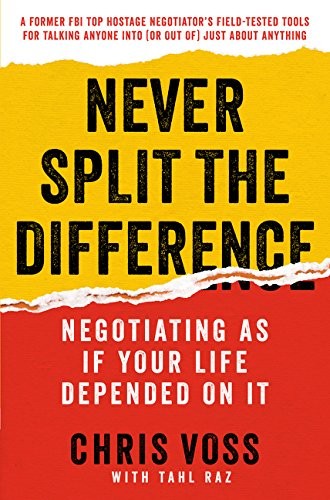
Never Split the Difference
Chris Voss
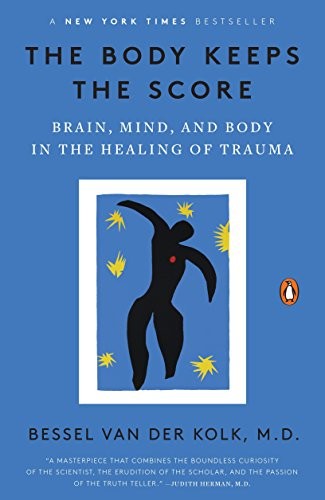
The Body Keeps the Score
Bessel van der Kolk

Nonviolent Communication
Marshall Rosenberg

Atomic Habits
James Clear

The 5 Love Languages
Gary Chapman

The Psychology of Money
Morgan Housel

The Seven Principles for Making Marriage Work
John Gottman
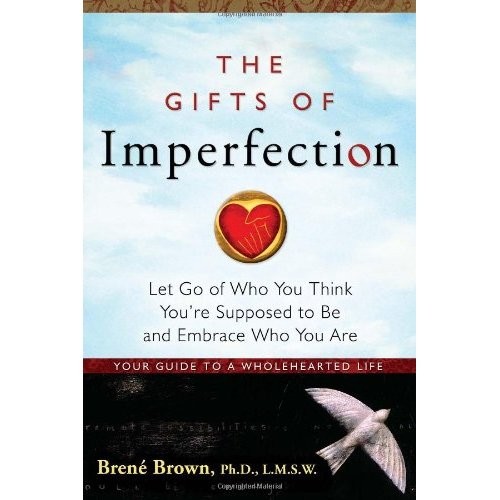
The Gifts of Imperfection
Brené Brown

How to Win Friends and Influence People
Dale Carnegie
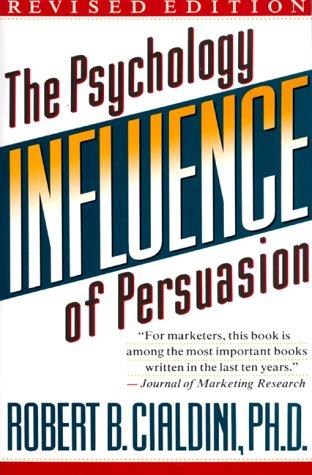
Influence
Robert Cialdini