Mental Health
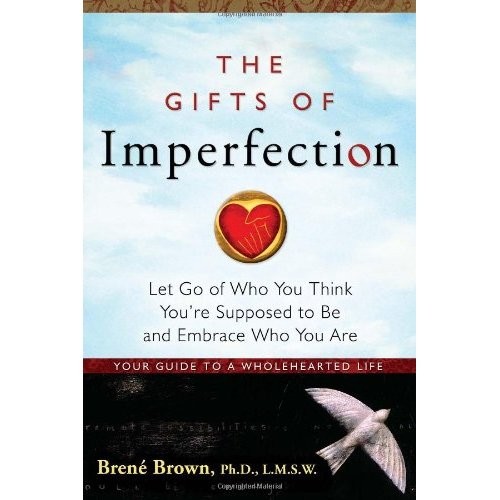
The Gifts of Imperfection
by Brené Brown · 2010 · 137 pages
★4.24· 283K ratings
The Gifts of Imperfection
Worthiness is not something you earn. It's something you claim. And claiming it requires letting go of who you think you're supposed to be.
Takeaway 1: Wholehearted Living Starts With Worthiness
Brené Brown spent years researching shame, vulnerability, and belonging. The people she calls "wholehearted" — those who had a strong sense of love, belonging, and joy in their lives — shared one distinguishing feature: they believed they were worthy of love and belonging.
Not because they'd earned it. Not because they'd achieved enough. They simply believed it.
The people who struggled most with connection and joy believed the opposite: that they would be worthy once they were thinner, more successful, more productive, less flawed. The "once I…" mindset is the enemy of wholehearted living. It turns belonging into a future state contingent on not being who you currently are.
The shift Brown describes: wholehearted living begins with accepting yourself as worthy now, not later. This is not easy. But it is the beginning.
Takeaway 2: Vulnerability Is Strength, Not Weakness
Our culture equates vulnerability with weakness. Brown's research suggests the opposite: vulnerability is the birthplace of everything we value most — love, belonging, creativity, joy, authenticity.
The attempt to armor against vulnerability — through perfectionism, numbness, busyness, cynicism — doesn't protect us. It cuts us off. We can't selectively numb the uncomfortable emotions without also numbing joy, gratitude, and connection.
The research finding that changed Brown's thinking: the people with the highest joy and strongest connections were not those who'd avoided difficulty. They were those who'd allowed themselves to be seen — fully, with their imperfections intact.
Takeaway 3: Cultivating Gratitude and Letting Go of Scarcity
One of the most actionable findings in the book: joy and gratitude are deeply connected — but the direction of causation is not what you'd expect.
It's not that people feel grateful because their lives are good. It's that people who regularly practice gratitude experience more joy. The practice precedes the feeling.
Brown also identifies a cultural "scarcity" default: waking up with the thought that you haven't done enough, aren't enough, don't have enough. This is not natural. It's learned. And it can be unlearned — through deliberate gratitude practice, through present-moment awareness, through recognizing that "enough" is already here.
The practical move: keep a gratitude journal. Not a list of big blessings, but tiny specifics — the light through the window, the first sip of coffee, a moment when someone laughed. The brain can't simultaneously feel gratitude and scarcity. The practice trains it toward the former.
Analysis
The Gifts of Imperfection is the most personal of Brown's books and perhaps the most immediately useful. At 137 pages, it's short and direct — organized around ten practices that distinguish wholehearted people from those living more defended, performance-oriented lives.
The book doesn't offer research in the way her academic work does, but it distills the findings into accessible language. It is best read alongside her TED Talk ("The Power of Vulnerability") which launched her into public consciousness.
About the Author
Brené Brown is a research professor at the University of Houston Graduate College of Social Work. She has spent over two decades studying courage, vulnerability, shame, and empathy. Her TED Talk "The Power of Vulnerability" is one of the most-viewed talks in TED history. She is the author of six New York Times bestsellers.
You Might Also Like
See all →
Maybe You Should Talk to Someone
Lori Gottlieb
The Body Keeps the Score
Bessel van der Kolk
Reasons to Stay Alive
Matt Haig

Secure Love
Julie Menanno
Obsessed
Allison Britz

Relationship OCD
Sheva Rajaee

Far From The Tree
Andrew Solomon
The Codependency Recovery Plan
Krystal Mazzola

When Things Fall Apart
Pema Chodron

This Naked Mind
Annie Grace

8 Keys to Safe Trauma Recovery
Babette Rothschild