Philosophy
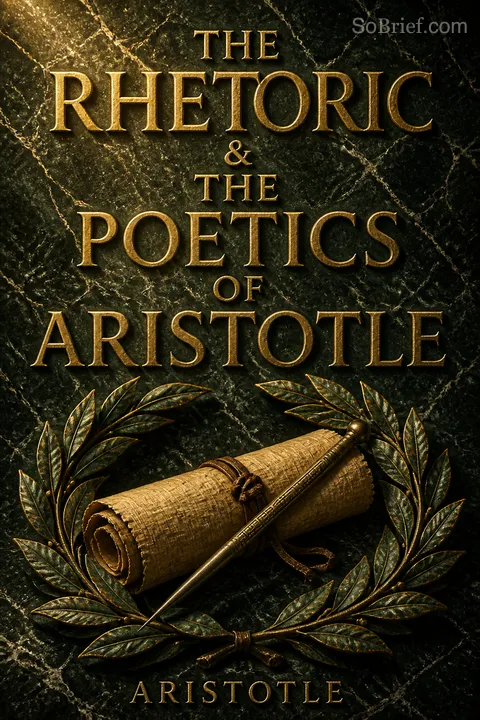
The Rhetoric & The Poetics of Aristotle
by Aristotle · 1984
★4.48
The Rhetoric & The Poetics of Aristotle
12 Takeaways: 1) Rhetoric is the counterpart of Dialectic, accessible to all.
Key Insight 1: Rhetoric is the counterpart of Dialectic, accessible to all.
This insight from The Rhetoric & The Poetics of Aristotle by Aristotle represents one of the foundational ideas in this philosophical work.
Key Insight 2: Persuasion hinges on the speaker's character, the audience's emotions, and the speech's proof.
This insight from The Rhetoric & The Poetics of Aristotle by Aristotle represents one of the foundational ideas in this philosophical work.
Key Insight 3: Oratory divides into political, forensic, and ceremonial, each with distinct aims.
This insight from The Rhetoric & The Poetics of Aristotle by Aristotle represents one of the foundational ideas in this philosophical work.
Key Insight 4: Political oratory centers on future expediency, demanding knowledge of state affairs.
This insight from The Rhetoric & The Poetics of Aristotle by Aristotle represents one of the foundational ideas in this philosophical work.
Key Insight 5: Happiness, the ultimate aim, comprises virtue, independence, and secure pleasure.
This insight from The Rhetoric & The Poetics of Aristotle by Aristotle represents one of the foundational ideas in this philosophical work.
Key Insight 6: Virtue, the essence of nobility, encompasses justice, courage, temperance, and more.
This insight from The Rhetoric & The Poetics of Aristotle by Aristotle represents one of the foundational ideas in this philosophical work.
Key Insight 7: Understanding government forms is crucial for effective political persuasion.
This insight from The Rhetoric & The Poetics of Aristotle by Aristotle represents one of the foundational ideas in this philosophical work.
Key Insight 8: Wrongdoing stems from vice, lack of control, and the pursuit of pleasure or utility.
This insight from The Rhetoric & The Poetics of Aristotle by Aristotle represents one of the foundational ideas in this philosophical work.
Key Insight 9: Pleasure, a key motivator, is the conscious movement to a normal state of being.
This insight from The Rhetoric & The Poetics of Aristotle by Aristotle represents one of the foundational ideas in this philosophical work.
Key Insight 10: Fear, a pain from impending evil, is countered by confidence in safety and ability.
This insight from The Rhetoric & The Poetics of Aristotle by Aristotle represents one of the foundational ideas in this philosophical work.
Key Insight 11: Virtue is a faculty of beneficence, most honored in justice and courage.
This insight from The Rhetoric & The Poetics of Aristotle by Aristotle represents one of the foundational ideas in this philosophical work.
Key Insight 12: Persuasion relies on both logical demonstration and ethical appeal.
This insight from The Rhetoric & The Poetics of Aristotle by Aristotle represents one of the foundational ideas in this philosophical work.
You Might Also Like
See all →
Man's Search for Meaning
Viktor Frankl

Doorway to Artistry
Esther Lightcap Meek

IGNORANCE (L')
Milan Kundera
Awakening From the Meaning Crisis
John Vervaeke
Buddhism
Alan W. Watts
Power, Freedom, and Grace
Deepak Chopra
365 Science of Mind
Ernest Shurtleff Holmes
The Psychology of Human Misjudgement
Charles T. Munger

Everything Is Never Enough
Bobby Jamieson

Hyperreality
Mike Hockney

Love Thy Body
Nancy R. Pearcey

The Matter With Things
Iain McGilchrist