Philosophy
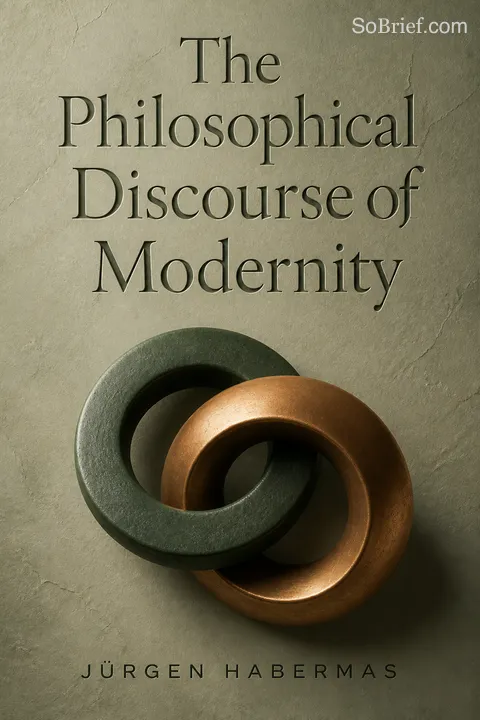
The Philosophical Discourse of Modernity
by Jürgen Habermas · 1984
★4.42
The Philosophical Discourse of Modernity
11 Takeaways: 1) Hegel Defined Modernity's Self-Reassurance and Its Inherent Divisions
Key Insight 1: Hegel Defined Modernity's Self-Reassurance and Its Inherent Divisions
This insight from The Philosophical Discourse of Modernity by Jürgen Habermas represents one of the foundational ideas in this philosophical work.
Key Insight 2: Young Hegelians Sought Practical Philosophy, Yet Remained Subject-Centered
This insight from The Philosophical Discourse of Modernity by Jürgen Habermas represents one of the foundational ideas in this philosophical work.
Key Insight 3: Nietzsche Unmasked Reason as Will to Power, Elevating the Aesthetic
This insight from The Philosophical Discourse of Modernity by Jürgen Habermas represents one of the foundational ideas in this philosophical work.
Key Insight 4: Heidegger's History of Being: A Temporalized, Yet Aporia-Ridden, Ontology
This insight from The Philosophical Discourse of Modernity by Jürgen Habermas represents one of the foundational ideas in this philosophical work.
Key Insight 5: Derrida's Deconstruction of Phonocentrism Levels Philosophy and Literature
This insight from The Philosophical Discourse of Modernity by Jürgen Habermas represents one of the foundational ideas in this philosophical work.
Key Insight 6: Bataille's General Economics Explored the Sacred as Reason's Excluded Other
This insight from The Philosophical Discourse of Modernity by Jürgen Habermas represents one of the foundational ideas in this philosophical work.
Key Insight 7: Foucault's Genealogy Unmasked Human Sciences as Technologies of Power
This insight from The Philosophical Discourse of Modernity by Jürgen Habermas represents one of the foundational ideas in this philosophical work.
Key Insight 8: Post-Nietzschean Critiques Share a Common Aporia of Self-Referentiality
This insight from The Philosophical Discourse of Modernity by Jürgen Habermas represents one of the foundational ideas in this philosophical work.
Key Insight 9: The Paradigm of Subject-Centered Reason is Exhausted
This insight from The Philosophical Discourse of Modernity by Jürgen Habermas represents one of the foundational ideas in this philosophical work.
Key Insight 10: Communicative Reason Offers a Way Out of Modernity's Dilemmas
This insight from The Philosophical Discourse of Modernity by Jürgen Habermas represents one of the foundational ideas in this philosophical work.
Key Insight 11: Salvaging Modernity's Normative Content Requires Communicative Reason
This insight from The Philosophical Discourse of Modernity by Jürgen Habermas represents one of the foundational ideas in this philosophical work.
You Might Also Like
See all →
Man's Search for Meaning
Viktor Frankl

Doorway to Artistry
Esther Lightcap Meek
IGNORANCE (L')
Milan Kundera
Awakening From the Meaning Crisis
John Vervaeke
Buddhism
Alan W. Watts
Power, Freedom, and Grace
Deepak Chopra
365 Science of Mind
Ernest Shurtleff Holmes
The Psychology of Human Misjudgement
Charles T. Munger

Everything Is Never Enough
Bobby Jamieson

Hyperreality
Mike Hockney

Love Thy Body
Nancy R. Pearcey
The Matter With Things
Iain McGilchrist