Philosophy
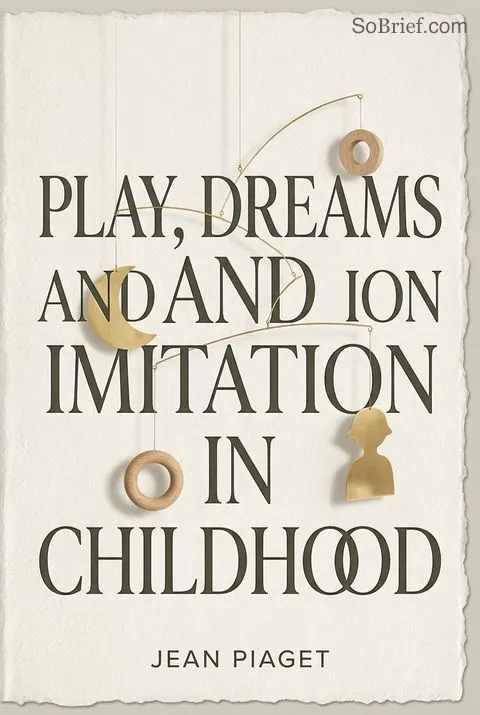
Play, Dreams and Imitation in Childhood
by Jean Piaget · 1984
★4.60
Play, Dreams and Imitation in Childhood
10 Takeaways: 1) Imitation is a Learned Process, Evolving from Reflexes to Representation
Key Insight 1: Imitation is a Learned Process, Evolving from Reflexes to Representation
This insight from Play, Dreams and Imitation in Childhood by Jean Piaget represents one of the foundational ideas in this philosophical work.
Key Insight 2: Play is the Primacy of Assimilation, Driven by Functional Pleasure
This insight from Play, Dreams and Imitation in Childhood by Jean Piaget represents one of the foundational ideas in this philosophical work.
Key Insight 3: Sensory-Motor Stages Lay the Foundation for Later Mental Structures
This insight from Play, Dreams and Imitation in Childhood by Jean Piaget represents one of the foundational ideas in this philosophical work.
Key Insight 4: The Symbolic Function Emerges as a Bridge to Conceptual Thought
This insight from Play, Dreams and Imitation in Childhood by Jean Piaget represents one of the foundational ideas in this philosophical work.
Key Insight 5: "Preconcepts" and "Transduction" Define Early, Egocentric Reasoning
This insight from Play, Dreams and Imitation in Childhood by Jean Piaget represents one of the foundational ideas in this philosophical work.
Key Insight 6: Animism and Artificialism Reflect the Child's Subjective Projection onto Reality
This insight from Play, Dreams and Imitation in Childhood by Jean Piaget represents one of the foundational ideas in this philosophical work.
Key Insight 7: The Mental Image is Interiorized Imitation, a Key "Signifier"
This insight from Play, Dreams and Imitation in Childhood by Jean Piaget represents one of the foundational ideas in this philosophical work.
Key Insight 8: Symbolic Play Serves the Ego's Needs for Assimilation and Compensation
This insight from Play, Dreams and Imitation in Childhood by Jean Piaget represents one of the foundational ideas in this philosophical work.
Key Insight 9: Unconscious Symbolism is Extreme Egocentric Assimilation, Not Mere Disguise
This insight from Play, Dreams and Imitation in Childhood by Jean Piaget represents one of the foundational ideas in this philosophical work.
Key Insight 10: Operational Thought Achieves Reversible Equilibrium, Integrating Earlier Forms
This insight from Play, Dreams and Imitation in Childhood by Jean Piaget represents one of the foundational ideas in this philosophical work.
You Might Also Like
See all →
Man's Search for Meaning
Viktor Frankl
Doorway to Artistry
Esther Lightcap Meek
IGNORANCE (L')
Milan Kundera
Awakening From the Meaning Crisis
John Vervaeke
Buddhism
Alan W. Watts
Power, Freedom, and Grace
Deepak Chopra
365 Science of Mind
Ernest Shurtleff Holmes
The Psychology of Human Misjudgement
Charles T. Munger

Everything Is Never Enough
Bobby Jamieson

Hyperreality
Mike Hockney

Love Thy Body
Nancy R. Pearcey
The Matter With Things
Iain McGilchrist