Philosophy
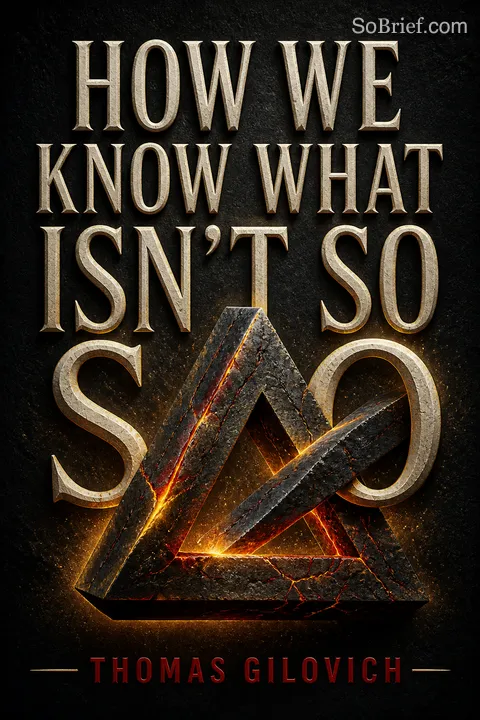
How We Know What Isn't So
by Thomas Gilovich · 1984
★4.49
How We Know What Isn't So
11 Takeaways: 1) Humans are wired to perceive order, even in purely random events.
Key Insight 1: Humans are wired to perceive order, even in purely random events.
This insight from How We Know What Isn't So by Thomas Gilovich represents one of the foundational ideas in this philosophical work.
Key Insight 2: We misinterpret statistical phenomena like regression, leading to false causal beliefs.
This insight from How We Know What Isn't So by Thomas Gilovich represents one of the foundational ideas in this philosophical work.
Key Insight 3: Our judgments are heavily biased by an over-reliance on confirmatory information.
This insight from How We Know What Isn't So by Thomas Gilovich represents one of the foundational ideas in this philosophical work.
Key Insight 4: Hidden or incomplete information often create an illusion of validity for our beliefs.
This insight from How We Know What Isn't So by Thomas Gilovich represents one of the foundational ideas in this philosophical work.
Key Insight 5: Our desires and preferences subtly shape what evidence we accept as true.
This insight from How We Know What Isn't So by Thomas Gilovich represents one of the foundational ideas in this philosophical work.
Key Insight 6: Secondhand information is frequently distorted, making it an unreliable source.
This insight from How We Know What Isn't So by Thomas Gilovich represents one of the foundational ideas in this philosophical work.
Key Insight 7: We overestimate social agreement, bolstering our beliefs with false consensus.
This insight from How We Know What Isn't So by Thomas Gilovich represents one of the foundational ideas in this philosophical work.
Key Insight 8: The nature of illness and human psychology makes ineffective health practices seem potent.
This insight from How We Know What Isn't So by Thomas Gilovich represents one of the foundational ideas in this philosophical work.
Key Insight 9: Ineffective interpersonal strategies persist due to biased feedback and selective interpretation.
This insight from How We Know What Isn't So by Thomas Gilovich represents one of the foundational ideas in this philosophical work.
Key Insight 10: The sheer volume of apparent evidence, often sensationalized, fuels belief in ESP.
This insight from How We Know What Isn't So by Thomas Gilovich represents one of the foundational ideas in this philosophical work.
Key Insight 11: Cultivating scientific habits of mind is essential to challenge dubious beliefs.
This insight from How We Know What Isn't So by Thomas Gilovich represents one of the foundational ideas in this philosophical work.
You Might Also Like
See all →
Man's Search for Meaning
Viktor Frankl
Doorway to Artistry
Esther Lightcap Meek

IGNORANCE (L')
Milan Kundera
Awakening From the Meaning Crisis
John Vervaeke
Buddhism
Alan W. Watts
Power, Freedom, and Grace
Deepak Chopra
365 Science of Mind
Ernest Shurtleff Holmes
The Psychology of Human Misjudgement
Charles T. Munger

Everything Is Never Enough
Bobby Jamieson
Hyperreality
Mike Hockney

Love Thy Body
Nancy R. Pearcey
The Matter With Things
Iain McGilchrist